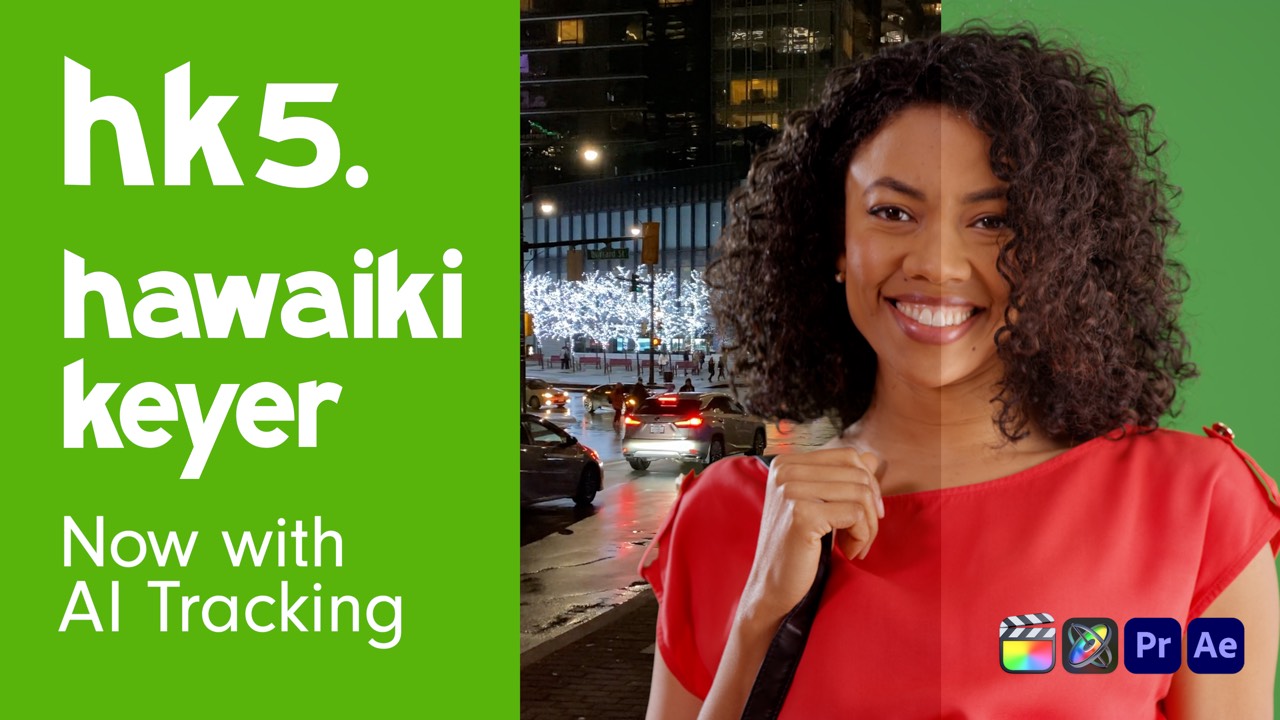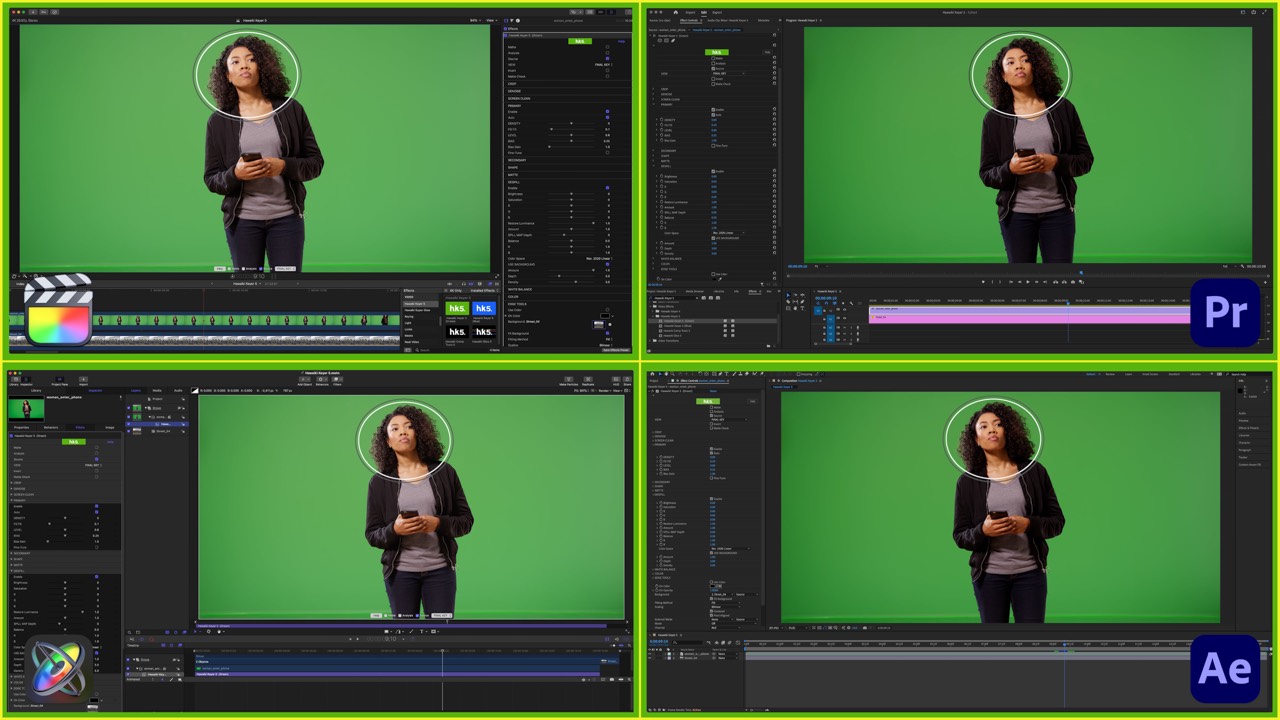
Hawaiki Keyer 5 - the industry’s most sophisticated Green & Blue Screen Keyer now with AI tracking
Hawaiki Keyer 5 builds on the best-in-class keying tools of Hawaiki Keyer 4 and enables you to use them more efficiently with even more powerful and intelligent tools for isolating your foreground.
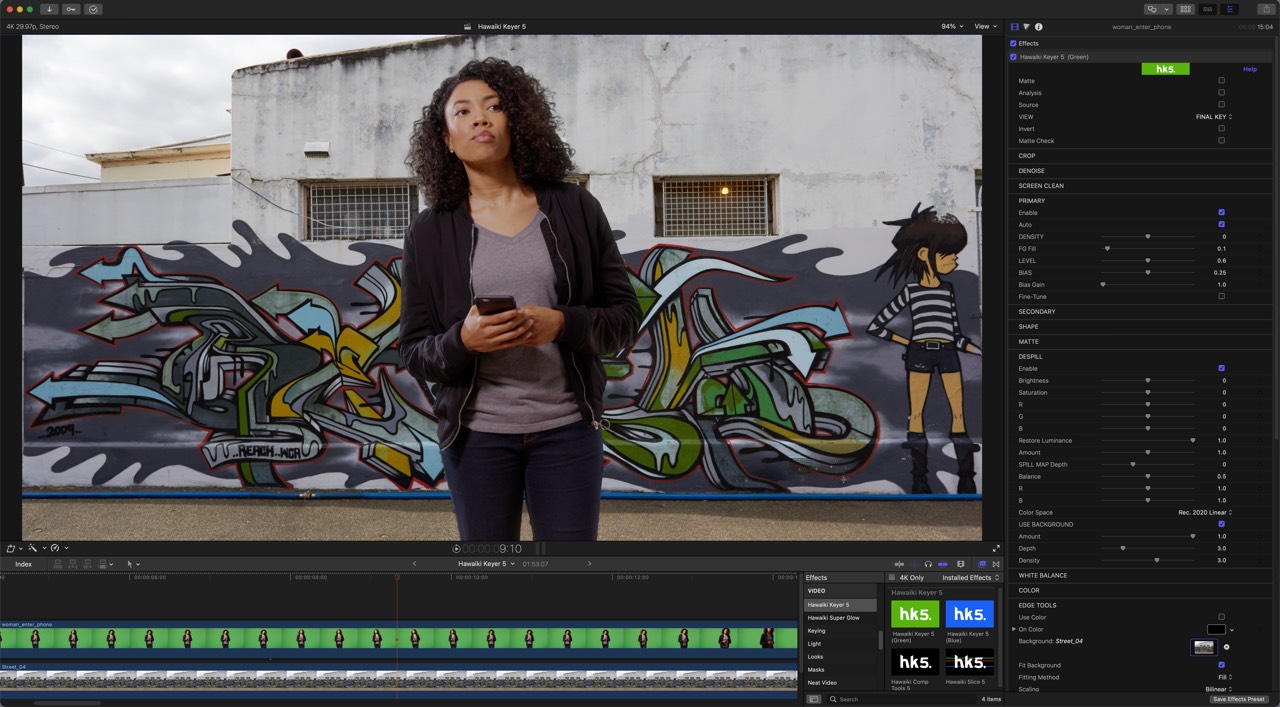
It's easier than ever to maintain hair and other fine detail by creating secondary keys and dynamic garbage mattes with the new AI-powered face & object tracking and the new realtime edge tracking. And the new Crop tools allow you to exclude the edges of the screen and speed up the rendering of complex keys.
Refining your composite is faster and simpler with all the edge tools that were in a separate plug-in now integrated into Hawaiki Keyer. And we've expanded the compositing toolset with even more edge operations and the ability to resize and composite the background within the plug-in.
On top of this we've refined the UI and operation of the plug-in and optimized it for Apple silicon and HDR.
"For my money, these new features along with the depth of the adjustments available make Hawaiki Keyer 5 the best green/blue-screen keyer plug-in on the market." Oliver Peters - digitalfilms
Strippersinthehood Apr 2026
So, who are the strippers in the hood? They're often women (and men) from the local community, who see stripping as a way to make a living. Many have limited job opportunities due to factors like lack of education, skills, or systemic barriers. Stripping can provide a relatively well-paying job, with some dancers earning upwards of $1,000 per night.
It's essential to approach the topic of strippers in the hood with empathy and understanding. Rather than stigmatizing or shaming individuals who work in the industry, we should seek to understand their stories and circumstances.
The presence of strip clubs in urban areas can have both positive and negative impacts on neighborhoods. On the one hand, these businesses can generate revenue and create jobs, which can be beneficial for local economies. On the other hand, they can also contribute to increased crime, noise pollution, and decreased property values. strippersinthehood
The world of stripping, also known as exotic dancing, has long been a topic of fascination and controversy. While it's often associated with seedy clubs and seedy characters, there's a lesser-known aspect of this industry that deserves attention: strippers in the hood. This phenomenon refers to the presence of strip clubs and exotic dancers in urban, often low-income neighborhoods.
However, for some entrepreneurs, opening a strip club in a urban area can be a lucrative business venture. These clubs often cater to a specific clientele, including working-class men and those from the local community. For some, these clubs serve as a space for socialization and relaxation, away from the stresses of everyday life. So, who are the strippers in the hood
In recent decades, strip clubs have increasingly popped up in urban areas, often in close proximity to residential neighborhoods. This trend has sparked concerns among community residents, local business owners, and law enforcement officials. The presence of strip clubs can lead to issues like noise pollution, increased crime, and a perceived decline in property values.
By doing so, we can begin to address the root causes of why strip clubs exist in urban areas. This includes investing in education, job training, and economic development initiatives that provide alternative opportunities for residents. Stripping can provide a relatively well-paying job, with
However, life as a stripper in the hood comes with its own set of challenges. Dancers often face stigma and judgment from their community, where they may be seen as "selling out" or "shaming" themselves. Additionally, they may encounter difficulties with law enforcement, who may view strip clubs as a nuisance or a hub for illicit activity.